 how-to
Managing Dry Eyes With Contact Lenses
Table of Contents
- Step 1: Identify What Is Causing Your Dry Eye
- Step 2: Choose the Best Contact Lenses for Dry Eyes
- Step 3: Build a Lens Care and Hygiene Routine That Protects Your Ocular Surface
- Step 4: Use Lubricating Eye Drops for Contacts Correctly
- Step 5: Adjust Your Screen Time and Blinking Habits
- Step 6: Know When to Take a Break From Contact Lenses
- Common Mistakes to Avoid When Managing Dry Eyes With Contact Lenses
- Frequently Asked Questions
Last Updated: September 19, 2026
Step 1: Identify What Is Causing Your Dry Eye
Managing dry eyes with contact lenses starts with knowing why your eyes feel dry. The cause decides the fix. Skip this step, and you'll waste months on drops that never solve the problem.
Managing dry eyes with contact lenses starts with knowing why your eyes feel dry. The cause decides the fix. Skip this step, and you'll waste months on drops that never solve the problem.
Contact Lens-Induced Dry Eye (CLIDE) Explained
Contact lens-induced dry eye (CLIDE) is dryness that develops or worsens because of contact lens wear itself. The lens disrupts your tear film, the thin layer that keeps your eye moist and comfortable.
Two things happen. First, the lens can reduce tear film stability, so tears evaporate faster. Second, some lenses limit oxygen to the cornea, which stresses the ocular surface.
Environmental Triggers: Humidity, Air Conditioning, and Screens
Your surroundings matter as much as your lenses.
- Low humidity dries out the air and your eyes with it
- Air conditioning and heating pull moisture from the room
- Long screen sessions cut your blinking frequency, so tears spread less often
Many people blame their lenses when the real trigger is a dry office or six hours of staring at a monitor. Fix the environment, and the lenses often feel fine.
Step 2: Choose the Best Contact Lenses for Dry Eyes
The best contact lenses for dry eyes are usually silicone hydrogel lenses, but the reason matters more than the label. Understanding the material science helps you ask better questions at your fitting.
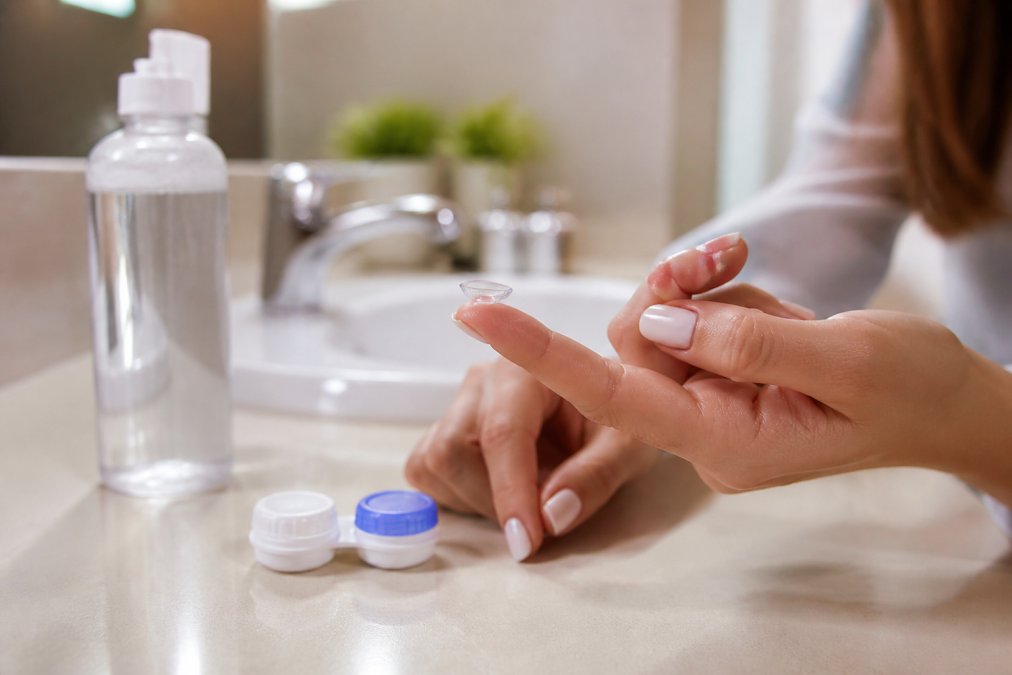
Hydrogel vs. Silicone Hydrogel: What Actually Changes
Both materials are soft lenses, but they manage oxygen and water differently.
- Traditional hydrogel lenses move oxygen through the water in the lens. The higher the water content, the more oxygen gets through, but the lens also loses water to the air over the day. As it dries out, it pulls moisture from your tear film to rehydrate itself, which can leave your eyes feeling drier by evening.
- Silicone hydrogel lenses move oxygen through the silicone itself, not just the water. That allows high oxygen permeability (measured as Dk/t) even at lower water content, so the lens does not need to steal as much moisture from your tears to stay hydrated.
Daily Disposables vs. Monthly Replacement
Daily disposables win for most dry-eye patients. You start each day with a clean lens, so there is no protein or lipid buildup to irritate the eye or cloud the surface. For people whose dryness is driven by deposits or by inconsistent cleaning, daily replacement removes the variable entirely.
| Feature | Daily Disposables | Monthly Replacement |
|---|---|---|
| Deposit risk | Very low | Higher without strict care |
| Convenience | Highest | Requires nightly cleaning |
| Best for | Dry, sensitive eyes | Consistent, careful cleaners |
| Upfront cost | Higher per day | Lower per day |
What to Ask at Your Fitting
- Ask which material your doctor is recommending and why it suits your tear film.
- Ask about the lens's Dk/t value and its water content, since those two numbers drive how it behaves over a full day.
- Ask whether a daily disposable in that material is available, since it removes the cleaning variable.
- Ask about the base curve and diameter, because a lens that moves too much or too little can cause dryness and discomfort regardless of material.
Your eye doctor can match the right material and fit to your eyes. A proper contact lens fitting makes more difference than any brand name.
Step 3: Build a Lens Care and Hygiene Routine That Protects Your Ocular Surface
A steady routine protects your ocular surface and keeps lenses comfortable. Most dry-eye problems trace back to shortcuts in care.
Follow these steps:
- Wash and dry your hands before touching lenses
- Use fresh lens care solution every time, never tap water
- Rub and rinse lenses if your solution calls for it
- Replace your lens case every few months
- Never sleep in lenses unless your doctor approves it
Step 4: Use Lubricating Eye Drops for Contacts Correctly
Lubricating eye drops for contacts add moisture and help stabilize your tear film. But not every drop works with every lens.
Step 5: Adjust Your Screen Time and Blinking Habits
Screen time dries eyes out because you blink less. When you blink, you spread tears across the eye. Stare at a screen, and that blink rate drops.
A few more habits help:
- Position your screen slightly below eye level
- Keep the screen about an arm's length away
- Blink fully and often, especially during focused work
- Take short breaks to look away and blink
Step 6: Know When to Take a Break From Contact Lenses
Sometimes the best move is to give your eyes a rest. If symptoms keep flaring, a break can help your ocular surface recover.
Watch for these signs:
- Constant burning or grittiness
- Redness that won't settle
- Blurry vision that clears when you remove lenses
- Pain or light sensitivity
Common Mistakes to Avoid When Managing Dry Eyes With Contact Lenses
Most setbacks come from a handful of repeat mistakes. Here is what we see most often, plus one area most guides skip entirely: how makeup and skincare interact with your lenses.
The Makeup and Skincare Problem Nobody Talks About
Eye makeup and facial products are a major, under-discussed driver of contact lens dryness. Two mechanisms are at work.
- Debris on the lens surface. Eyeliner, mascara, and eyeshadow particles flake and migrate onto the lens. Even a small amount of debris disrupts the tear film and creates that gritty, filmy feeling by afternoon. Waterproof and long-wear formulas are the worst offenders because they are designed to resist removal, including by your own tears.
- Oil gland blockage. Moisturizers, facial oils, and heavy creams applied near the lash line can migrate into the meibomian glands along the eyelid margin. Those glands secrete the oil layer that keeps your tears from evaporating too fast. When they get clogged, tears evaporate quickly and dryness follows, even if the lens itself is fine.
A few habits reduce both problems:
- Apply facial moisturizer and eye cream before inserting lenses, and let them absorb fully first.
- Avoid applying eyeliner on the inner waterline (the tightline); it sits directly against the eye and migrates onto the lens fastest.
- Replace mascara every three months and never share it, since it is a common source of contamination (How To Use Cosmetics Safely Around Your Eyes).
- Remove all eye makeup every night with a gentle, oil-free remover, and clean the eyelid margin, not just the lashes.
- If you notice a recurring gritty feeling, try a few days without eye makeup to see whether debris is the trigger.
Other Repeat Mistakes
- Using the wrong drops. Drops not made for contacts can cloud lenses and irritate eyes. Stick to preservative-free options labeled for contact lens use.
- Wearing lenses too long. Exceeding the recommended wear time dries out the eye and reduces oxygen to the cornea.
- Skipping the 20-20-20 rule. Hours of screen time without breaks worsens symptoms because blink rate drops and tears spread less often.
- Sleeping in lenses. This cuts oxygen to the cornea and raises infection risk, and it is one of the fastest ways to turn mild dryness into a serious problem.
- Topping off solution. Reusing old solution in the case lets organisms and deposits build up. Dump it and refill every time.
If dry eyes keep coming back, a professional contact lens fitting can find a lens that fits your eyes and your daily habits. RAGSDALE VISION CENTER offers precise fittings and care for hard-to-fit and dry-eye patients.
Frequently Asked Questions
What is the 3:1:1 rule for contacts?
If you have dry eyes, talk to your eye doctor about a schedule that fits your lens type and lifestyle.
Should I stop wearing contacts if I have dry eyes?
Not necessarily. Many people with dry eyes can keep wearing contacts by switching to daily disposables, using preservative-free lubricating eye drops, and following a consistent care routine. However, if you notice persistent redness, pain, or blurry vision, remove your lenses and see an eye doctor. Managing dry eyes with contact lenses is possible for most people with the right fit and habits.
Are daily disposables better for dry eyes?
Daily disposables are often a better choice for dry eyes because they eliminate protein buildup and lens deposits that can worsen irritation. Fresh lenses every day also reduce the risk of solution-related sensitivity. Your optometrist can help you decide if daily disposables are the best contact lenses for dry eyes based on your tear film and lifestyle.
What are the best eye drops for contact lens wearers?
Preservative-free lubricating eye drops for contacts are usually the safest choice. Preservatives like benzalkonium chloride can irritate the ocular surface over time, especially with frequent use. Look for drops labeled for contact lens wearers and follow the package instructions. If your dry eye symptoms continue, your eye doctor may recommend additional treatments such as warm compresses or prescription options.